Ital’Eat, the ordering and management app of an Italian caterer
Customers know what they will get; the shop knows what it has left.
Project at a glance
- The need
- Let customers order a platter at any time knowing what they will get, and give the shop a simple tool to follow its orders and stock.
- My contribution
- Designed and built the app: customer journey, back office, stock, stamp card and AI invoice reading, approved by a person.
What was built
- Menu and platters
- Orders to collect
- Tile-based back office
- Stock and AI-read invoices
Project in progress, not yet in service in the shop. The screenshots come from the preview in presentation mode, with fictional data; no commercial result is claimed.

- Nature
- Installable web app (PWA): customer ordering and back office · client project in progress
- Period
- Since October 2026
- Client
- Ital'EatItalian caterer, Hayange (France)
The need
An Italian caterer in Hayange sells platters, buffets and cold cuts sliced to order. Customers needed to be able to order at any time while knowing exactly what they would get, and the shop needed a simple tool to follow its orders and stock. Stock was the sore point: the shop’s stock and a software’s stock drift apart as soon as nobody records each sale at the counter.
For customers
- The menu and the day’s board, kept up to date from the shop.
- Platters for 5 to 70 people, with grams per person, the list of products, a real photo and the ordering lead time shown before ordering.
- Orders to collect at a chosen time, paid at the counter: there is no online payment.
- Order tracking, a stamp loyalty card and a page dedicated to the holidays.
- Easy reading for everyone: large buttons, targets of at least 48 px, text of at least 16 px and a layout that holds at 200% zoom.
For the shop
- A dashboard made of tiles: today’s orders, preparations, low stock, customers.
- "Count what is left": in the evening at closing time, staff only touch the products whose count differs, and the app corrects the gaps, without requiring every sale to be recorded.
- A photo of a wholesaler’s invoice, read by AI: the lines read are suggested, a person checks them, and nothing enters the stock without their approval. The photo is not kept.
- Orders, preparations, stamps, catalogue, customers, figures, accounting, reminders and the team, with two roles: manager and employee.
Evidence
Every figure carries its source. No commercial result is claimed.
105
Repository commits, from 7 to 10 October 2026
SourceProject repository history, re-read on 13 October 2026
188
Automated tests
SourceProject log, 10 October 2026
118
Pages checked at 375 and 1,280 px, with no accessibility violation detected (axe)
SourceProject log, check of 9 October 2026
Where the project stands
Work started on 7 October 2026. A first demo took place on 9 October, and its feedback was worked through in eleven batches. The app runs as a preview, in presentation mode: orders and customers there are fictional, and no payment is real. It is not yet in service in the shop; it is planned to go into production on a dedicated server.
What is not claimed
No commercial result: the app is not yet used by the caterer’s customers. The screenshots come from the preview in presentation mode, with fictional data; the product photos are the caterer’s own. The Google rating visible on the home page is part of the caterer’s site: this file does not vouch for it. The app’s sixteen line drawings were generated by AI, then vectorised by a script. The shop’s phone number is out of frame.
Technical details
The technologies used for this project. Features and their limits are detailed in the narrative.
- Next.js
- React
- TypeScript
- Tailwind CSS
- Motion
- API Claude
Expertise involved
Gallery
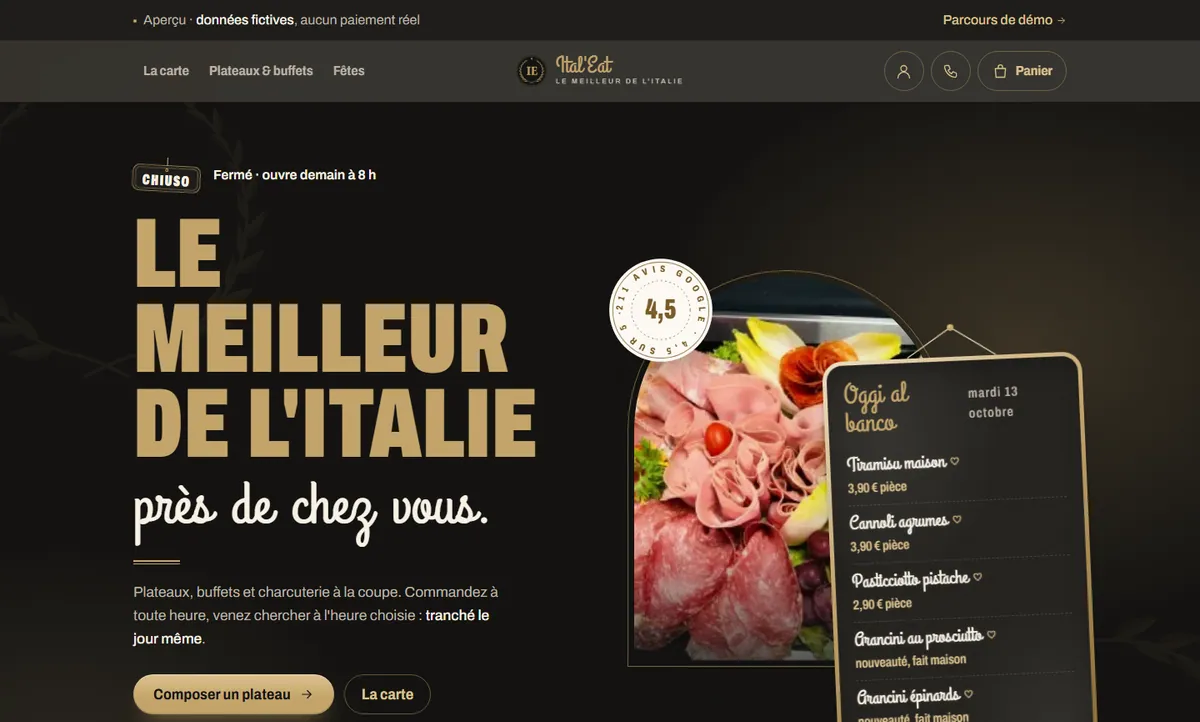
The home page, in presentation mode. 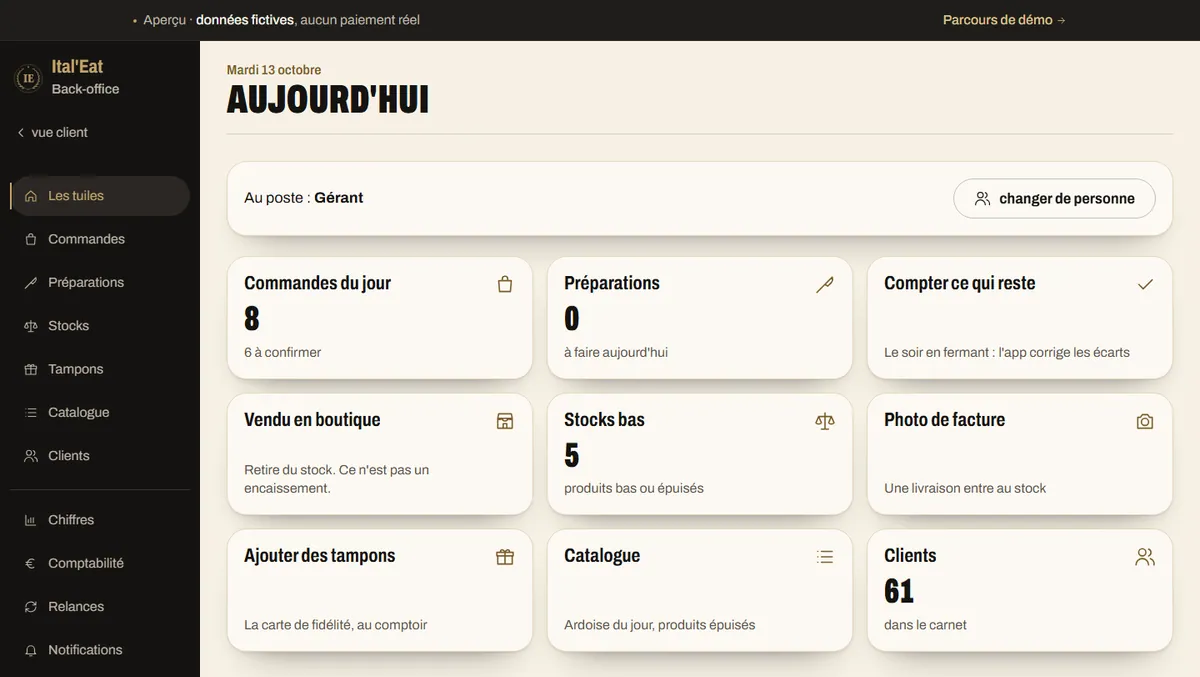
The back office: one tile per task of the day. 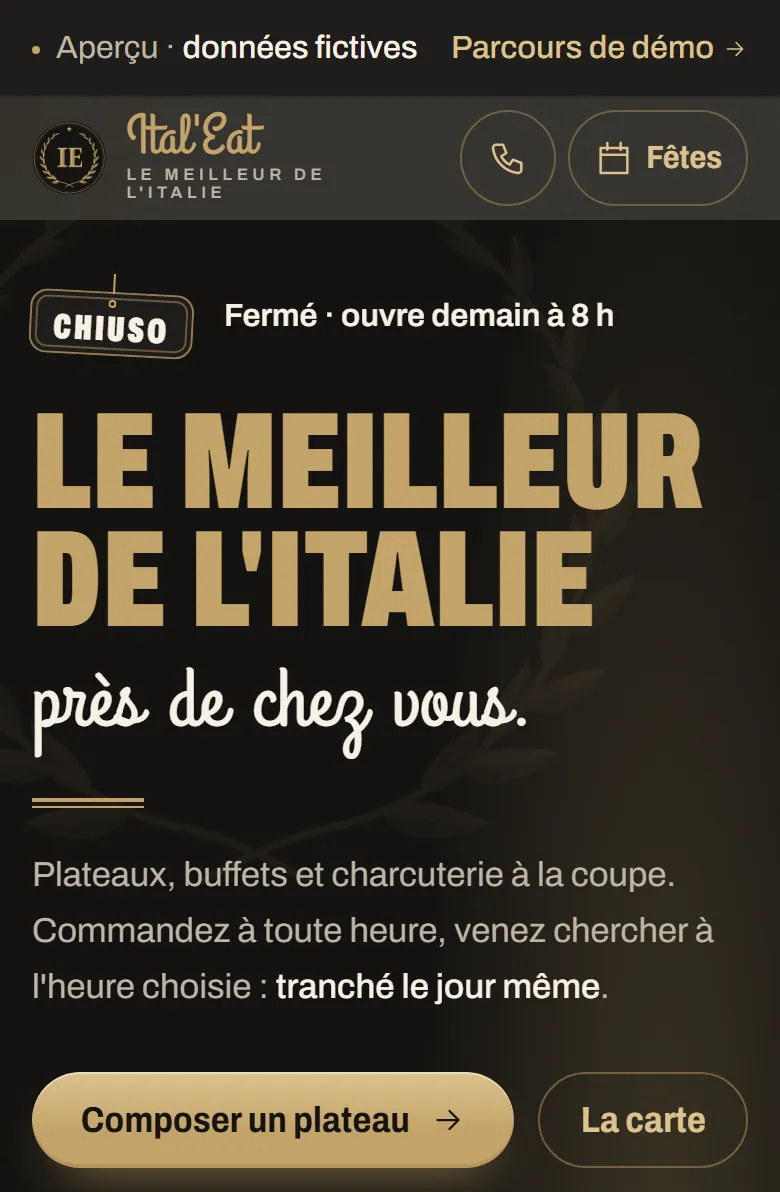
On a phone. 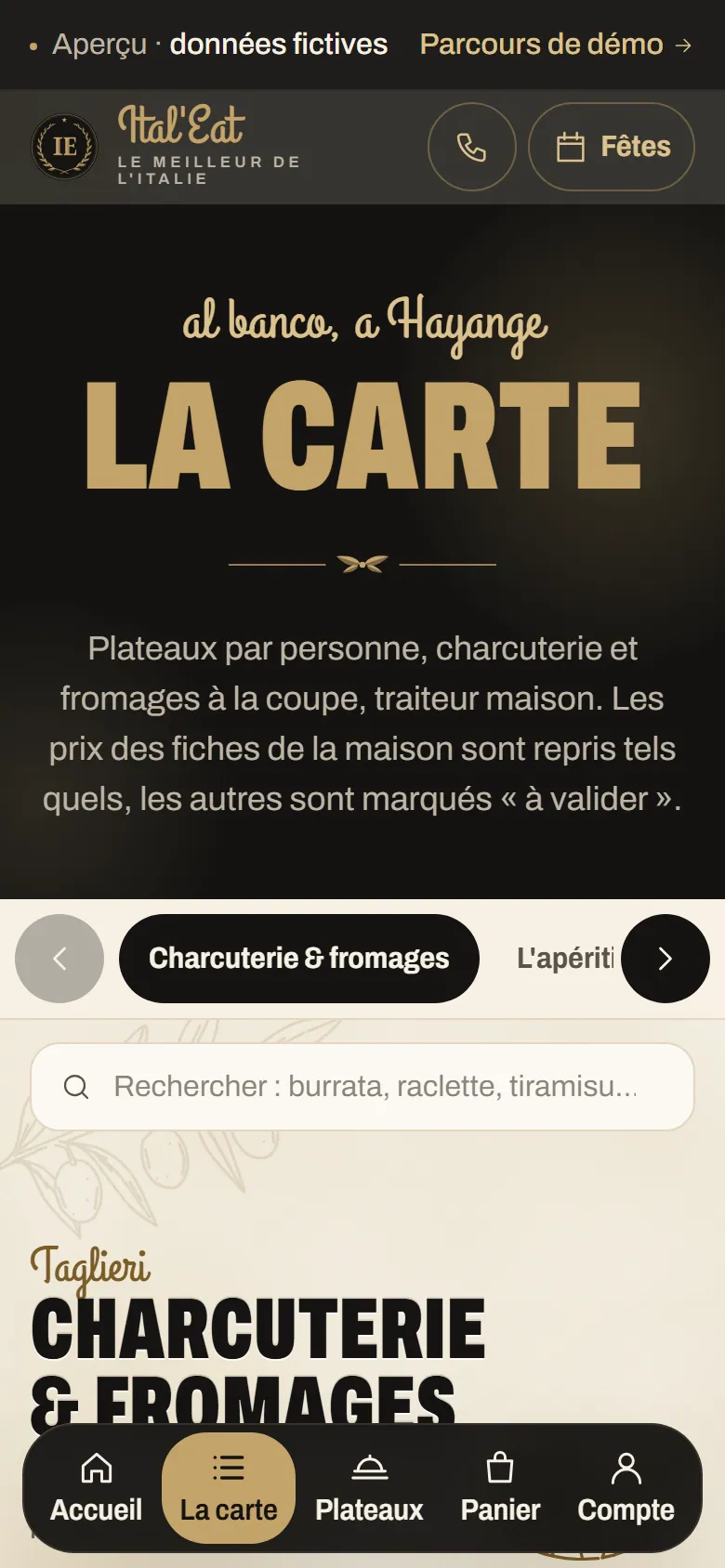
The menu. 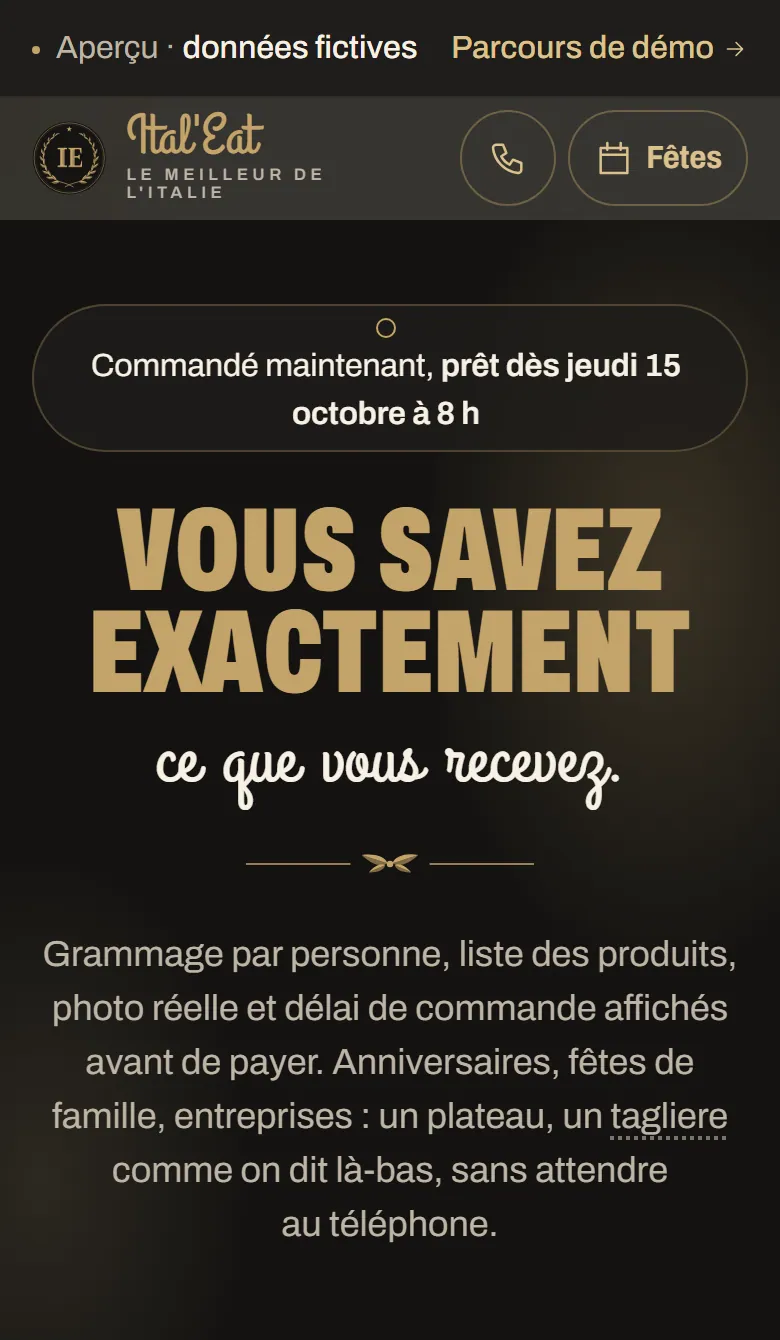
Platters: what you get, before you order. 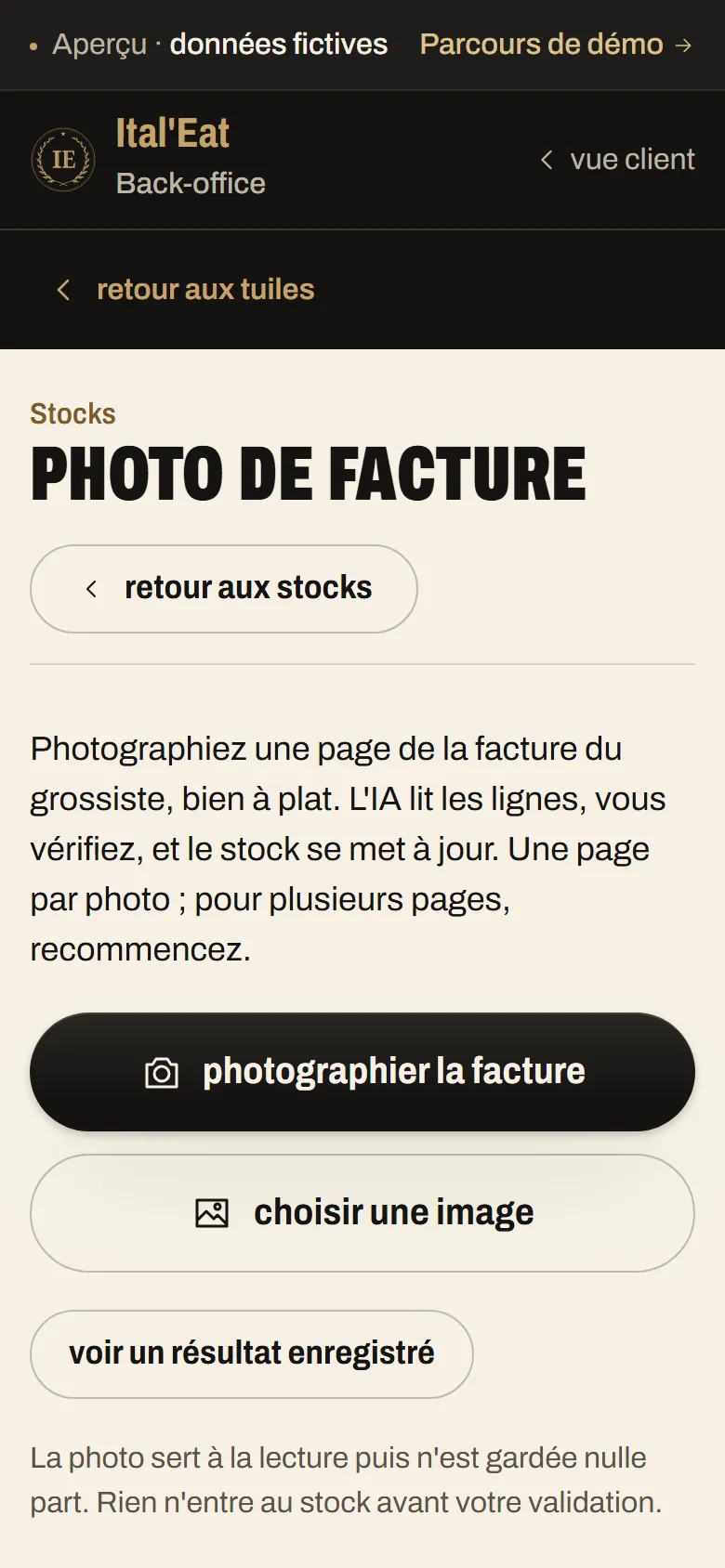
The invoice read by AI, approved by a person.


A similar need?
Let's discuss your context and what you would like to simplify.